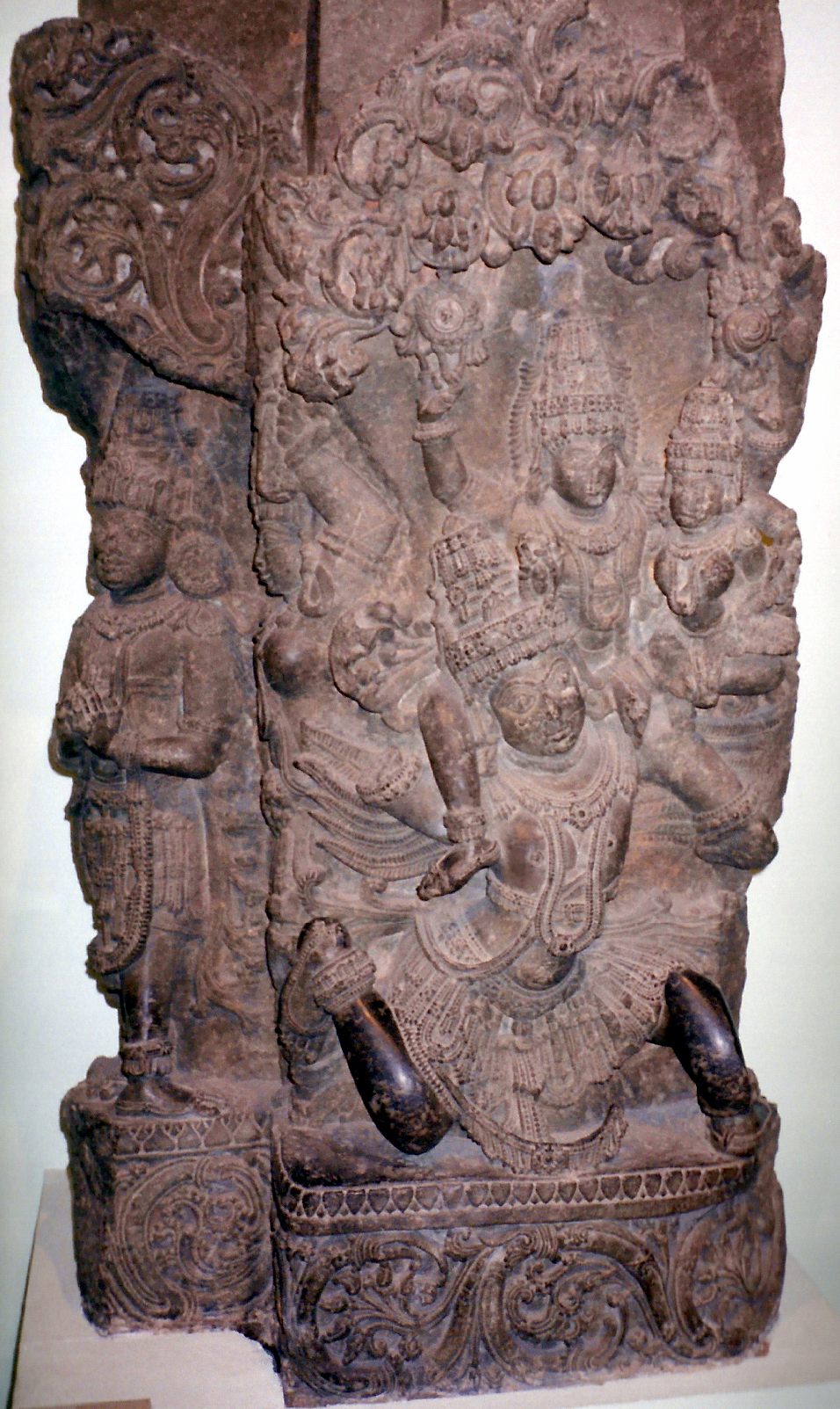
![]() |
Goddess Saraswati (10th century) |
Where Indic wisdom meets global strategy. Reflections on culture, power, memory and the forces shaping civilizations past and present.
Sunday, 24 September 2023
Rationality is a myth; man is a creature of emotions
Saturday, 23 September 2023
Lord Kalki: The end of metaphysics, the beginning of new universe
Sunday, 17 September 2023
John Galt: Ayn Rand’s world-destroying, world-conquering conquistador
John Galt, the central figure in Ayn Rand’s Atlas Shrugged, is often hailed as a prophet of radical individualism and the quintessential libertarian hero. But peel back the sheen of heroic rhetoric, and he emerges not as a liberator but as a postmodern conquistador—one who presides, not with sword and musket, but with monologues and manifestos, over the symbolic slaughter of millions and the systematic dismantling of civilization.
Galt is not a man of compromise. He believes he alone knows the optimal way of life, and in Rand’s telling, that conviction gives him the moral authority to impose his worldview upon all of humanity. His revolution is not merely ideological; it is cataclysmic. By the novel’s end, Galt and his disciples have crippled industry, toppled governments, sabotaged infrastructure, and watched—without flinching—as millions perish in the resulting chaos. This, we are told, is the necessary price of moral purification.
In Rand’s inverted moral universe, these orchestrators of collapse are not villains but saints. Their atrocities are justified, even celebrated, because they are carried out in the name of her so-called “rational” values: atheism, reason, individualism, unregulated capitalism, and freedom. That these values require the destruction of nearly everything else—tradition, community, religion, empathy, doubt—matters little. The world must be remade in their image, or it must burn.
This narrative impulse echoes Rand’s disturbing admiration for the historical conquistadors—men like Columbus and Cortés—whose genocidal violence, she believed, was a necessary prelude to the birth of modern America. In essays marked by staggering historical ignorance and moral blindness, she denigrated Native American cultures and suggested that their annihilation was deserved. Just as the conquistadors of old cleared the land with steel and fire, so too must Rand’s philosophical vanguard clear the mental and cultural terrain of the 20th century.
To be clear, Rand did not preach violence in the literal sense. But she recognized that her vision would never be accepted willingly. People, tethered as they are to religion, tradition, and emotional nuance, would need to be broken. And thus, Atlas Shrugged becomes not a novel of liberation, but of coercion through collapse. It is the fantasy of a cultural tabula rasa, achieved not by persuasion but by the erosion of everything else.
Galt does not kill with his hands. He kills with his voice. His infamous 60-page speech, the climactic sermon of Atlas Shrugged, is a rhetorical siege—a didactic ultimatum that offers no middle ground. Accept his truth in its totality, or be left to perish. The tone is not philosophical; it is theological. It is not a dialogue; it is dogma. In Rand’s Manichaean cosmos, there is no space for doubt, debate, or deviation. There is only the saved and the damned.
Though often labeled a philosopher of classical liberalism or libertarianism, Ayn Rand was no philosopher. Her grasp of the Western canon was shallow, her critiques of thinkers like Aristotle, Plato, and Kant riddled with caricature and confusion. Politically, she was less a theorist than a totalist—insisting that only one kind of person deserved to inherit the Earth: the person who lived strictly by her code. All others were unfit, parasitic, or tragically lost.
In the final decades of her life, Rand sought to birth a movement. What she managed instead was a cult. Her circle was filled with young, semi-educated idealists, many of whom soon grew disillusioned and abandoned her. Those who remained were often the mediocrities—the ones who mistook rigidity for clarity, bombast for brilliance. They lived in the shadow of Galt, and she became their oracle. Together, they transformed her system of thought into a theology without forgiveness.
Rand’s legacy endures not because of the strength of her ideas, but because of their allure. She offers certainty in a complex world, righteousness in the face of ambiguity, and a mythic hero for those weary of nuance. But beneath that promise lies a brutal message: if the world will not conform, let it collapse.
And in the end, that is what Atlas Shrugged is—a seductive hymn to destruction masquerading as liberation, a tale not of heroes but of zealots, not of freedom but of fire.
Sunday, 10 September 2023
Rajiv Malhotra's Being Different: Arguments against the ideologies of sameness, multiculturalism, assimilation
Started reading Rajiv Malhotra's book Being Different yesterday. Now on Chapter 3.
Sunday, 8 January 2023
Bhima: The Greatest Warrior of the Mahabharata
![]() |
Raja Ravi Varma’s Painting of Bhima |
Friday, 23 December 2022
Shiva in the Mahabharata: The God who turns vengeance into destiny & a force of history
Thursday, 22 December 2022
The end of the Kuru bloodline: Rethinking lineage in the Mahabharata
![]() |
Vyasa with Satyavati (Geeta Press Illustration) |
Wednesday, 21 December 2022
The Sons of Indra and Surya
![]() |
Sunrise in Uttarakhand |
Who Controls Social Media and Mainstream Media?
Tuesday, 20 December 2022
Kurukshetra Beyond Good and Evil: Rethinking Dharma in the Mahabharata
![]() |
Statue of Krishna and Arjuna in chariot Kurukshetra (Haryana) |
Monday, 19 December 2022
Garuda and the Metaphysics of Death and Rebirth
![]() |
Vishnu and Lakshmi on Garuda (12th century sculpture) |
Saturday, 17 December 2022
Aurobindo: Nationalism is the Work of God
![]() |
Copy of Bande Mataram Edited by Sri Aurobindo September 1907 |
Friday, 16 December 2022
Ram Mohan Roy’s View of Sanskrit Education
![]() |
Stamp Dedicated to the Sanskrit College (Issued in 1999) |
Thursday, 15 December 2022
The Master of Eclipses: Rahu and Ketu
Statue of Mohini (Avatar of Vishnu) |
Wednesday, 14 December 2022
The Sutras and Bhasyas of the Six Schools of Hindu Philosophy
![]() |
Shankaracharya with disciples Painting by Raja Ravi Varma |
Tuesday, 13 December 2022
Language and Grammar in the Vedic Age
![]() |
Birch bark manuscript from Kashmir of Panini’s Rupavatara |
Monday, 12 December 2022
Narasimha Rao: The accidental statesman who remade India
![]() |
P. V. Narasimha Rao |
Saturday, 10 December 2022
Naubandhana: The forgotten Vedic name of Mount Everest
During the Vedic age, the tallest peak of the Himalayan range—what the modern world calls Mount Everest—was known as Naubandhana, “the binding of the ship.” In the ancient imagination, this was not merely a mountain but the anchor point of survival itself, for it was here, according to tradition, that the boat carrying the great sages and the seeds of all earthly life was secured during the mahapralaya—the great deluge that swept away the old world.
The tale of Naubandhana lives on in the Mahabharata and in several Puranas. In the Atharva Veda, the towering mountain of Navaprabhramsana is believed to correspond to the Naubandhana of later epics. The most vivid account comes in the Vana Parva of the Mahabharata, within the Markandeya-Samasya Parva, when the sage Markandeya visits the Pandavas during their exile in the Kamyaka forest. As was their custom with all illumined visitors, the Pandavas asked him about the distant past, about dharma and the origins of humankind.
In answer, Markandeya spoke of Vaivasvata Manu, progenitor of the human race in the current kalpa—and of the time when life on earth was nearly extinguished.
One day, as Manu performed austerities on the banks of the River Virini, a tiny fish approached him, pleading for protection:
“O illustrious one, I am small and weak. The larger fish will devour me. Such is the law of the waters. But you, knower of dharma, can save me.”
Moved by compassion, Manu lifted the fish into a water pot and cared for it as one might a child. But the fish grew, outgrowing the pot, then a pond, and finally even the mighty Ganga. Each time, Manu relocated it, and each time the fish swelled to a size that defied its new home. Eventually, Manu carried it to the ocean—astonished that despite its vastness, he could still bear it with ease, for he was aided by divine strength.
In the ocean, the fish spoke again:
“O sage, you have guarded me faithfully. Now hear this: the time of the earth’s destruction is near. Build a sturdy boat. When the waters rise, board it with the sapta-rishis and take with you the seeds of all life. I will come for you, and you will know me by the horn upon my head.”
Manu now understood: this was no ordinary fish, but an incarnation of Prajapati Brahma—or, as some Puranas tell it, Lord Vishnu himself. He pledged to obey.
In time, Manu’s great boat was ready, filled with the sages and the seed of every living thing. Then came the deluge. Waters swallowed the land; waves rose like mountains; the sky itself seemed to collapse into the sea. Amid the chaos appeared the horned fish, immense beyond measure. Manu fastened the boat’s rope to its horn, and the fish towed them through the storm, shielding them from destruction.
At last, they came to where the Himalayas once rose in full majesty. All lay submerged save for one peak—the tallest, still piercing the floodwaters. The fish commanded Manu to bind the boat to it, and thus secured, the vessel and its sacred cargo endured until the waters receded.
From that day, the peak bore the name Naubandhana—the place where the boat was bound.
Today, the world knows this peak as Mount Everest, a name imposed in 1865 to honor Sir George Everest, a British Surveyor General who never even set eyes on it. This is the language of colonial cartography: erasing native names to overwrite history. But mountains are more than coordinates; they are repositories of memory, culture, and myth.
India’s tallest peak should not bear the burden of imperial nomenclature. It should reclaim the name that springs from the deepest strata of our civilization’s storytelling. To call it Naubandhana is not nostalgia—it is historical and cultural restitution. In that name lives the memory of survival, of divine intervention, and of the binding of life itself to the last refuge above the waters.
Let the summit once again be known for what it was in the beginning: not the Everest of colonial surveys, but Naubandhana—the eternal anchor.
Friday, 9 December 2022
What Can Narendra Modi Learn from George H.W. Bush
![]() |
Netanyahu and Modi Tel Aviv 2017 |
Wednesday, 7 December 2022
Is Journalism the First Draft of History?
Tuesday, 6 December 2022
On Bharavi’s Kiratarjuniya
![]() |
Shiva granting Pashupatastra to Arjuna |
Monday, 5 December 2022
Yoga in Katha, Shvetashvatara, and Maitri Upanishads
![]() |
Statue of Patanjali, (Haridwar) |
Sunday, 4 December 2022
The Subversive Character of History
Saturday, 3 December 2022
Shriharsha: The Philosopher and Poet of the Middle Ages
![]() |
Nala leaving Damayanti while she sleeps (Raja Ravi Varma’s painting) |
Friday, 2 December 2022
Ferguson’s Conception of the West’s Challenger
![]() |
Grinning Nixon meets Dour Mao (21 Feb 1972) |
Thursday, 1 December 2022
A Note on Gurcharan Das’s India Unbound
Wednesday, 30 November 2022
On The Gayatri Mantra
![]() |
10th Century Sculpture of Sadashiva (Parameshwara) |
Tuesday, 29 November 2022
Classical Indian Metaphysics by Stephen H. Phillips
Sunday, 27 November 2022
Girilal Jain’s Book: The Hindu Phenomena
If you are looking for a simple, concise, and systematic introduction to the political and cultural issues that India faced in the twentieth century (most of these issues remain unresolved and continue to plague this country in the twenty-first century), then Girilal Jain’s 1989 book The Hindu Phenomena is the one for you. Jain was the editor of The Times of India from 1978 to 1988. I read his book more than a decade ago—at that time, I was immensely impressed by his analysis of political and cultural issues. I regard Jain’s book as a classic, an absolute must-read.
Saturday, 26 November 2022
Rabindranath Tagore: On Hinduism, Semitic Religions, and Communism
![]() |
Tagore in 1925 |